- Home About RM Minerals
- Virtual Photo Museum Blog RM Contact
- Microscopy and instruments How to Buy Disclaimer
Copyright 2010-2026
www.rosellminerals.com



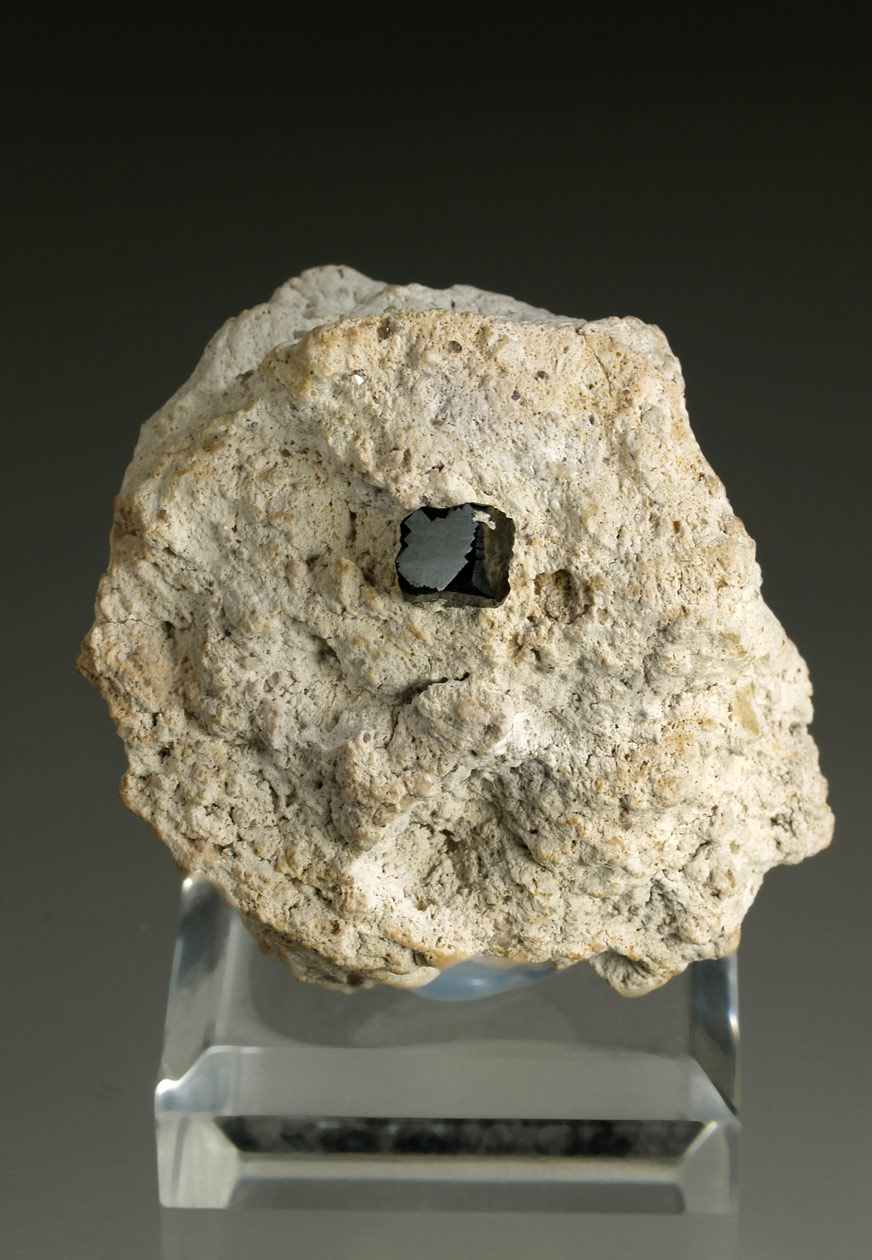


A brilliant and very sharp bixbyite crystal. A manganese oxyde well-known and appreciated by collector for its rich crystallographic forms. In this specimen we can see the cubic main form with vertex truncated by trapezohedron and a small triangular octahedron face. A crystallographic pleasure... Very aesthetically disposed on a volcanic rocky matrix. With an old display label.

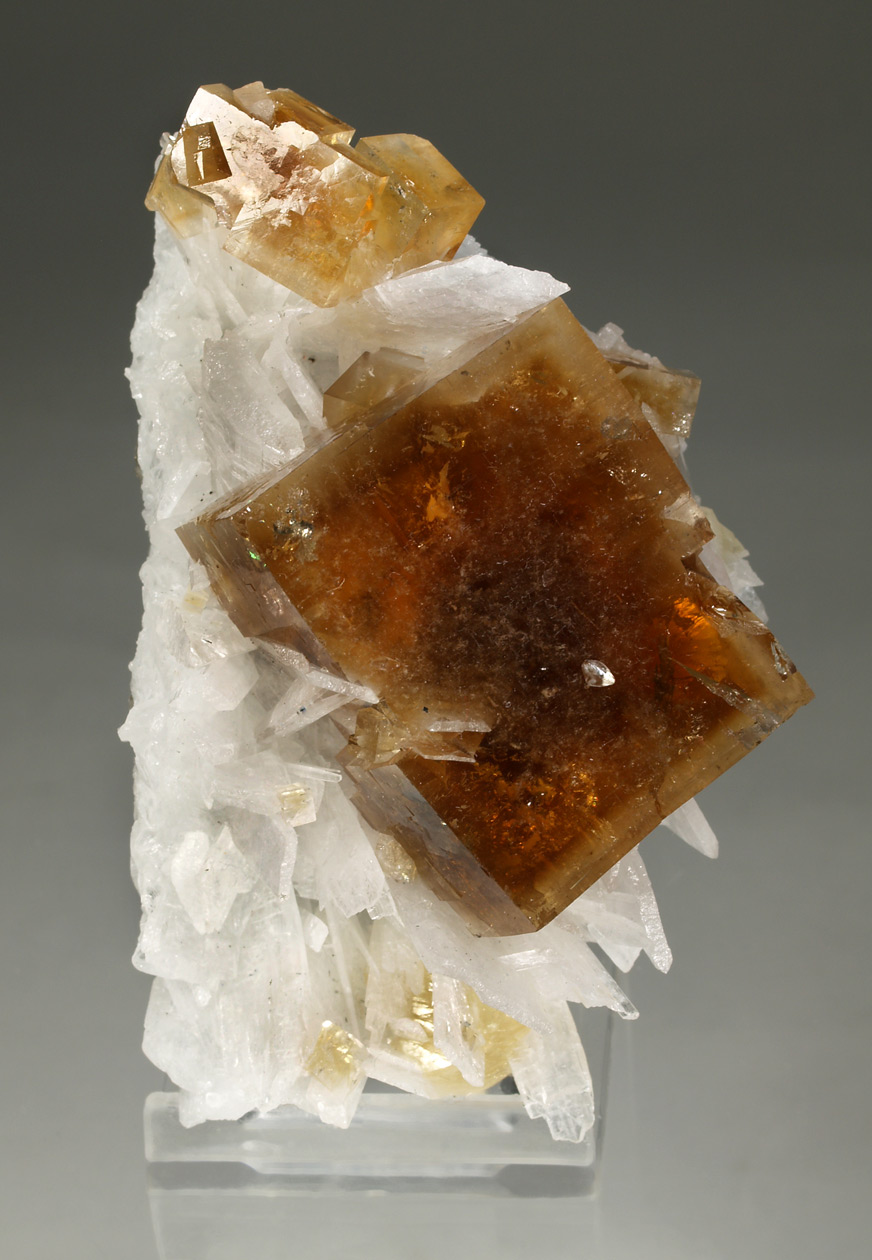


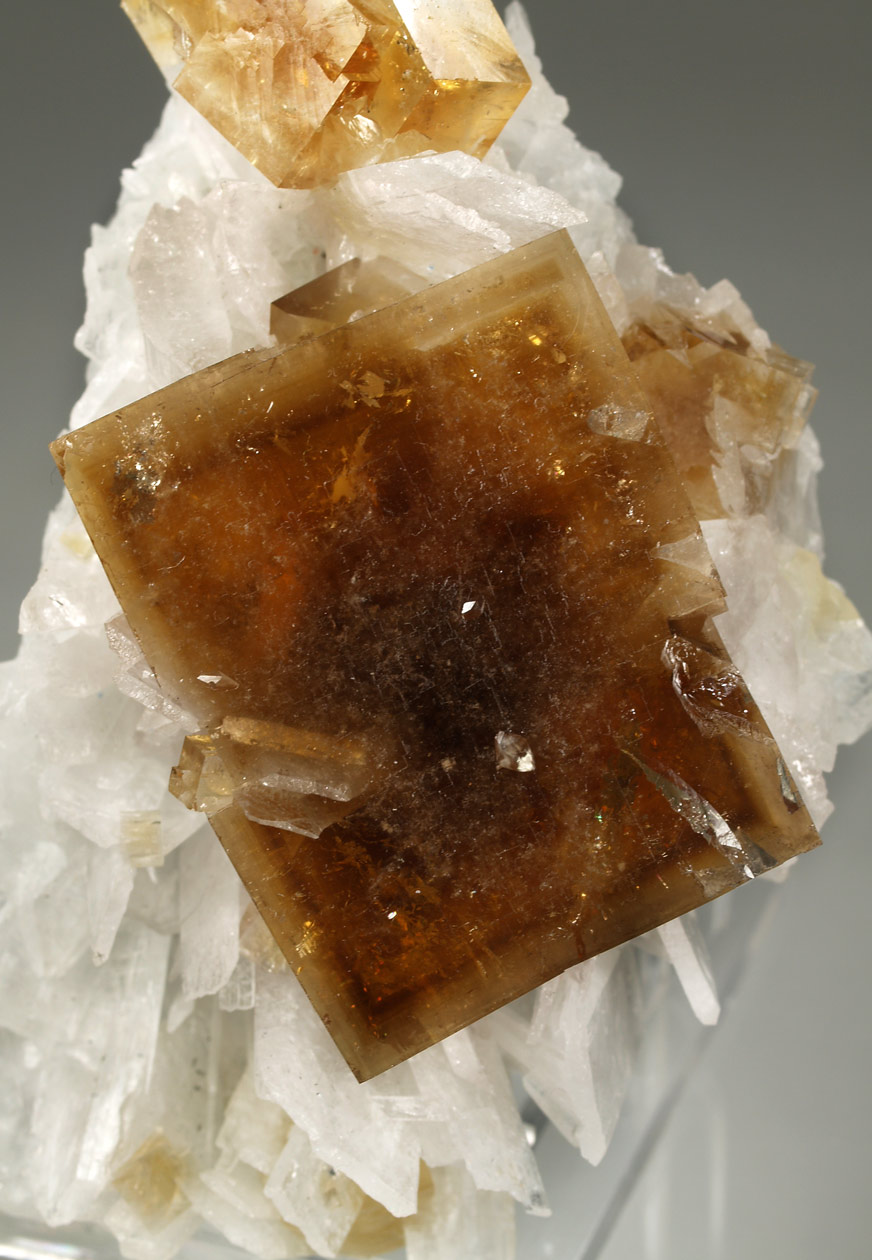


Group of fluorite crystals with faces and sharp edges. One of them shows a good size for the locality. Its intensely toasted honey color is very particular. Note that it is extremely fluorescent with a yellowish tone. It is accompanied by several tabular crystals of white celestite and a group of calcite. It is difficult to find in the market samples of this mine without damages (this only has a almost invisible small dent) since they "fall down" in the geodes. An aesthtic American classic.
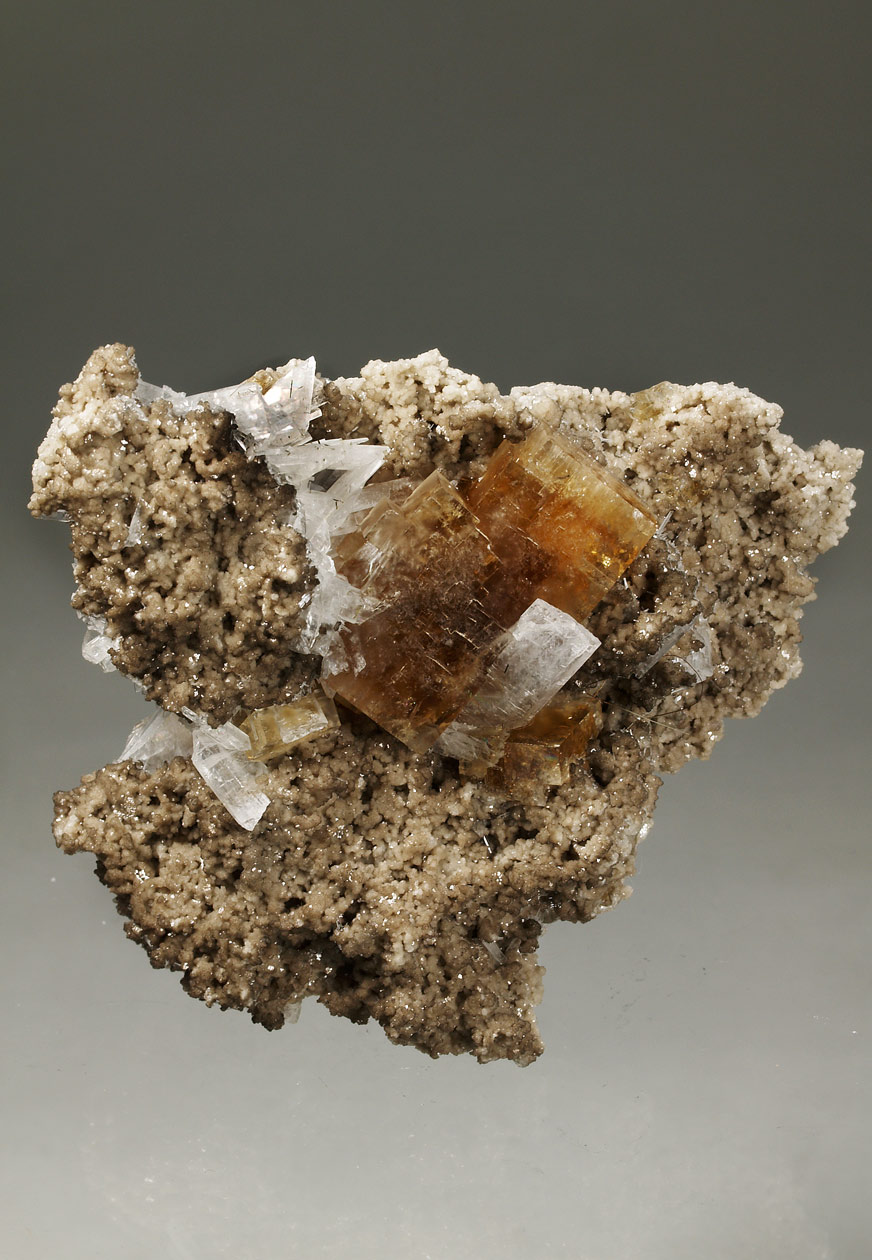


Group of fluorite crystals with echeloned parallel growth, with marked faces and edges and damage free. Its honey color is very particular to this locality. Note that it is extremely fluorescent with a yellowish tone. Accompanied by white celestite crystals and disposed on a matrix with dolomite and calcite. It is difficult to find in the market pieces from this mine without damages, because they use to "fall down" in the vugs. An aesthetic American classic.
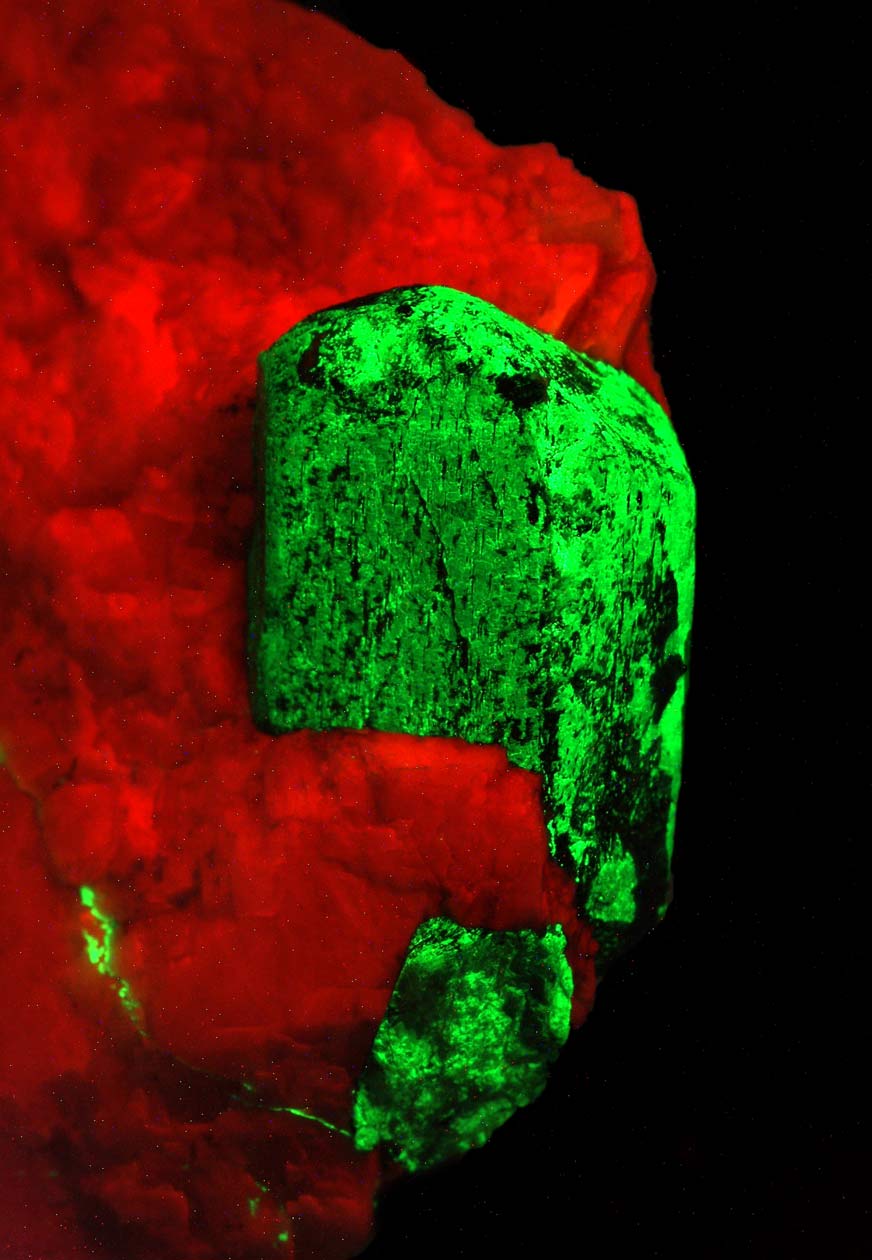


This specimen is notable for several reasons. On the one hand a very nice franklinite octahedron, an unusual iron and zinc oxide, with good size, and curved and brilliant faces (17 x 17 mm). On the back side it has some fractures that allow us see the metallic luster. On a matrix of calcite. On the other hand, we have a doubly terminated prismatic crystal of willemite, also with good size (17 x 10 mm). Willemite species usually presents fluorescence, and in this case, under shortwave UV light (also in the longwave UV), it has an intense yellowish green color. Calcite from Franklin is also notable for the intense red-orange fluorescence. In one specimen we have two species with good crystals and size.
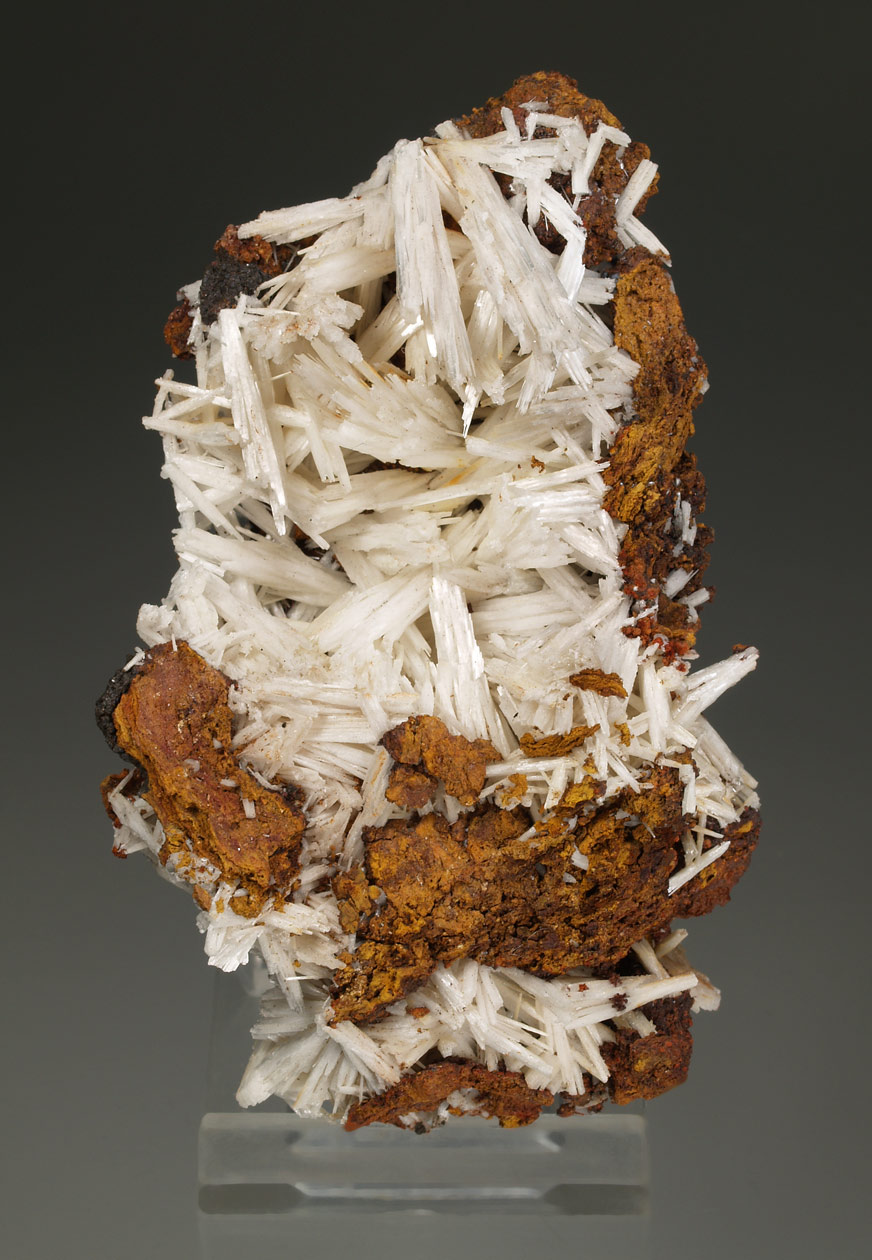


A huge size and top quality "Jackstraw" cerussite specimen. The "jackstraw" habit consists of numerous randomly oriented elongated crystals. The best known locality for this "jackstraw" type are those specimens from the Flux mine, in Arizona.
It is formed by a rich group of elongated cerussite crystals with an intense white color, divergent growth and good brilliance. In a limonite matrix. Both sides are mineralized. A classic specimen from this American locality. It was adquired by Gerard Vogel (Netherlands) in 1961, in California.
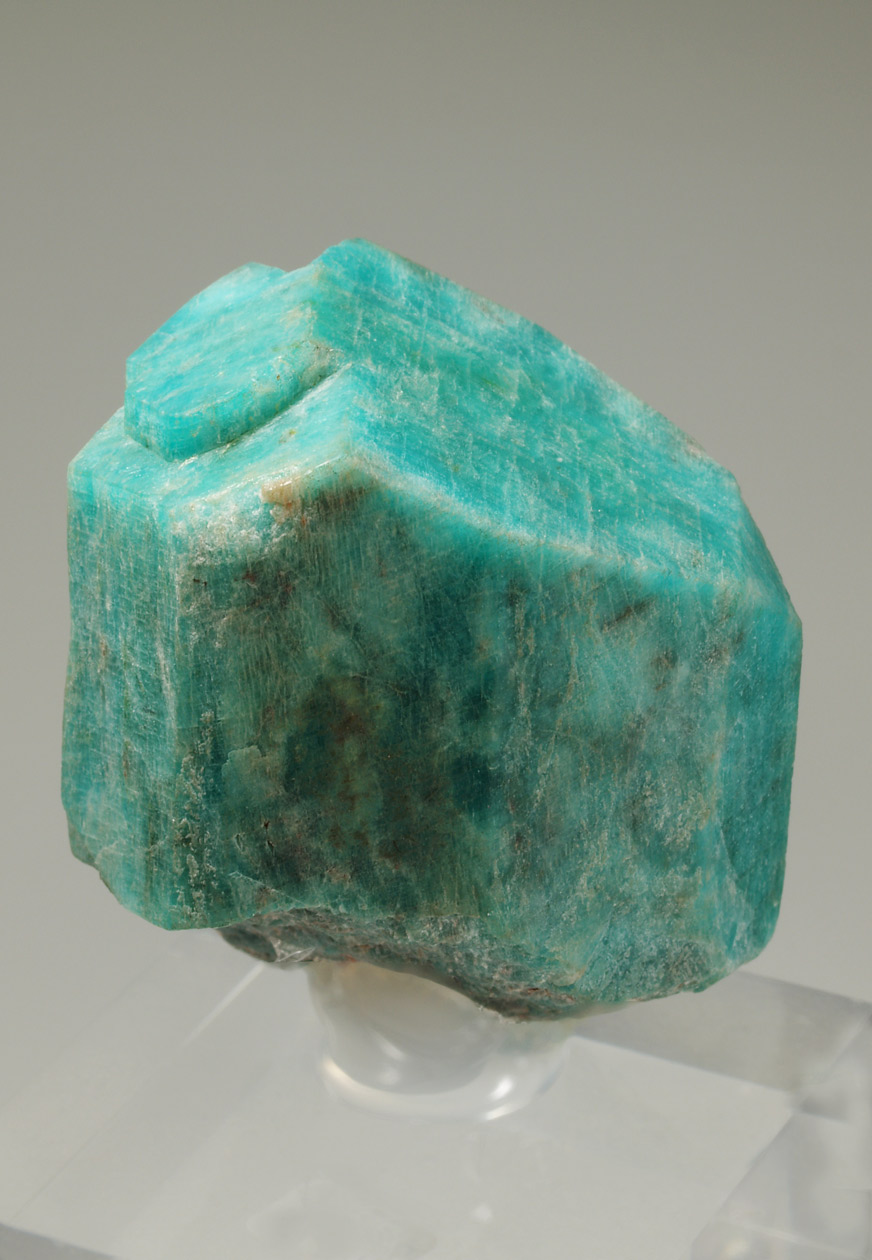


Elegant crystal of amazonite, a variety of microcline, good size, from a classic American locality. This crystal shows many faces delimited by triclinic pinacoids, along with growth in the upper faces. Good color and transparency when the light hits on the edges.
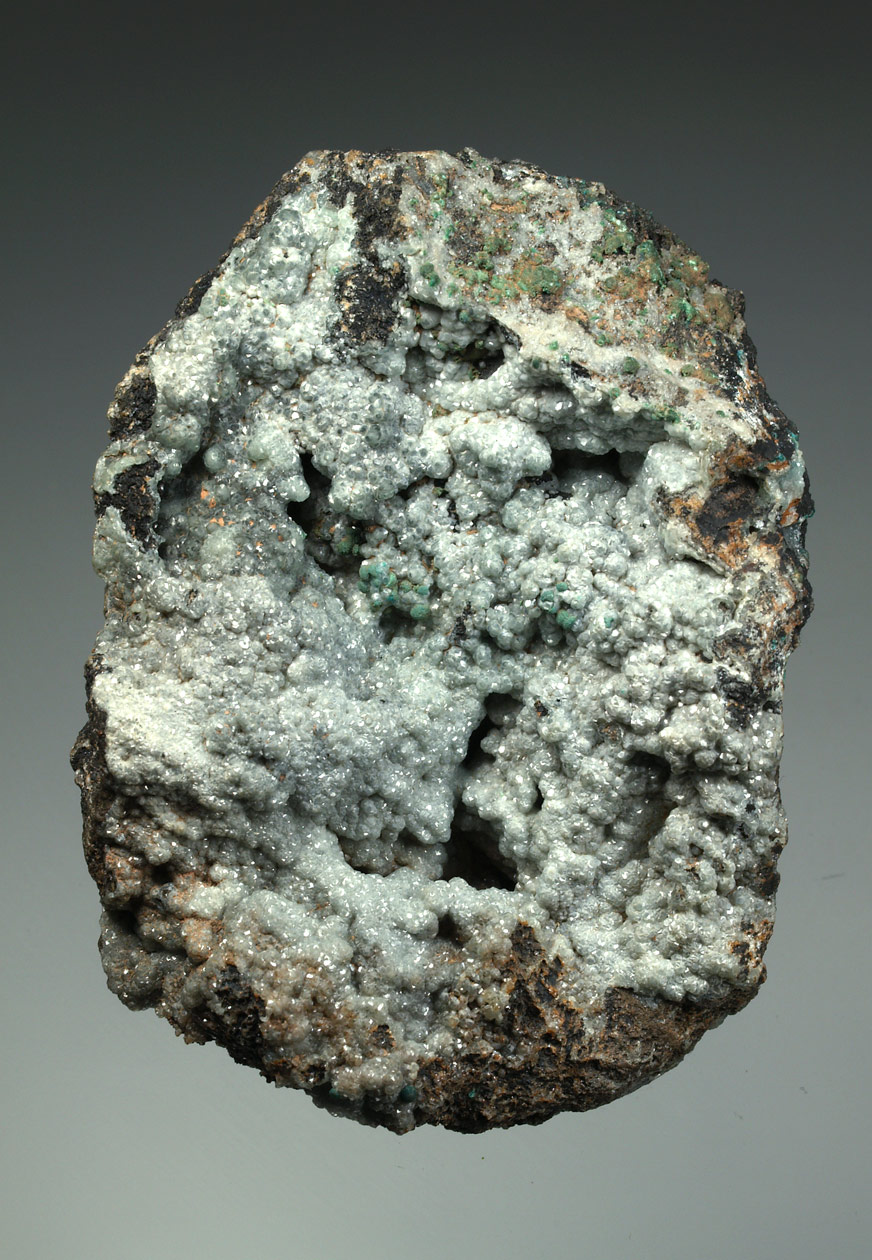


It is a brilliant smithsonite specimen from a mine not well represented and very uncommon in the collections, including the American collections. These zinc carbonate crystals show a polysynthetic growths of rhombohedrons, color between white to colorless, with a strong pearlescent luster and forming botryoidal aggregates. They are accompanied by blue-green rosasite, in spherical aggregates.
This specimen is interesting for different reasons. The accompanying old label belongs to the Antigua Casa (former house) Soler Pujol of Barcelona, known for its collections relating to the natural history sciences. We add to its history that this specimen was in the collection of Mr. Lluís Daunis, also from Barcelona. An old specimen from a interesting American locality.