- Home About RM Minerals
- Virtual Photo Museum Blog RM Contact
- Microscopy and instruments How to Buy Disclaimer
Copyright 2010-2026
www.rosellminerals.com



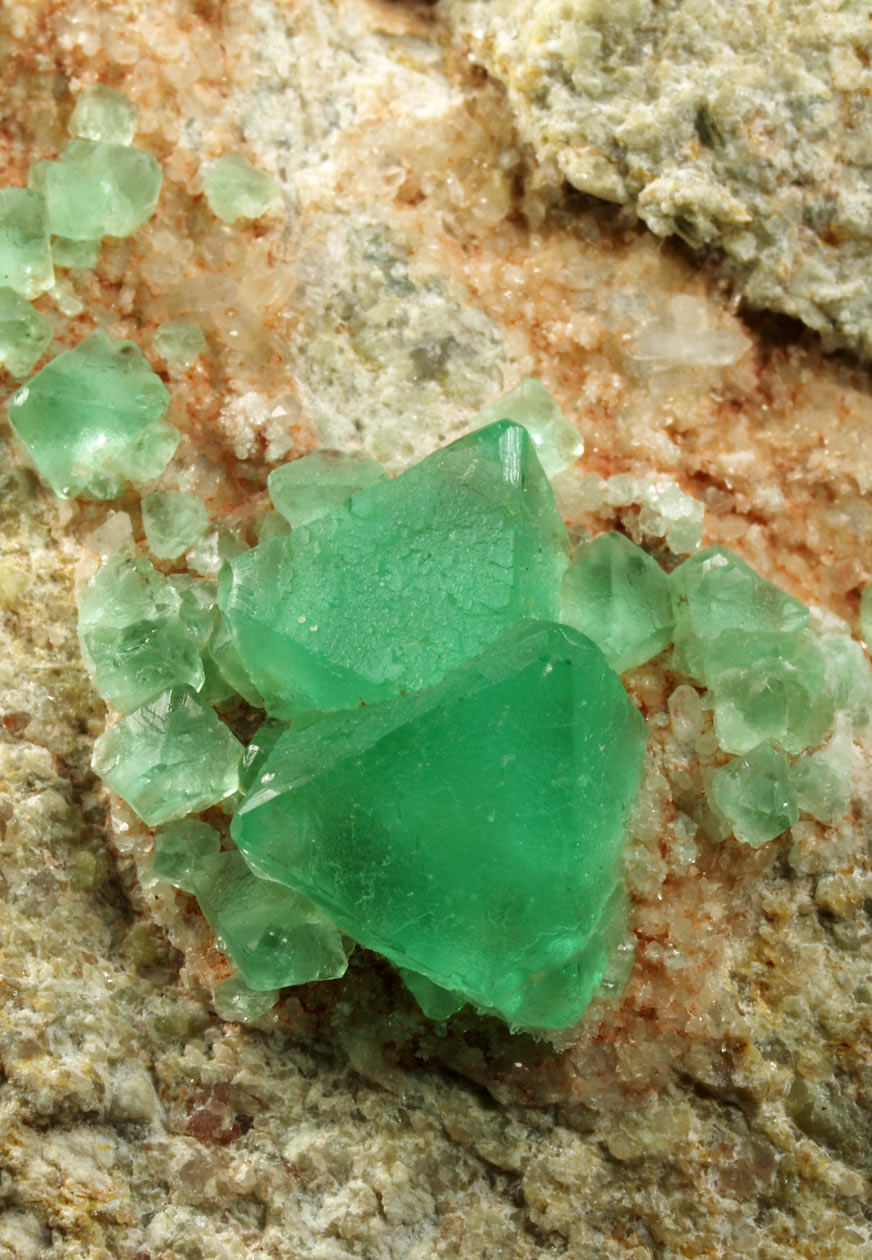


A group of fluorite crystals those, at first glance, seem just octahedra, but if you take a look carefully you will see complex terminations. Some crystals are isolated increasing its aesthetics. Good transparence and exceptional green color. Acompanied by small quartz crystals.
This specimen belongs to the "old" fluorites from Berta quarry, from an area of sericitized granodiorite. In the fractures, if it was enough space, they grew lining the walls. When quarry worked lower levels fluorite appeared in fresh granite matrix, but mostly without this depth of color. A great speciemen. A classic between classics of our country.
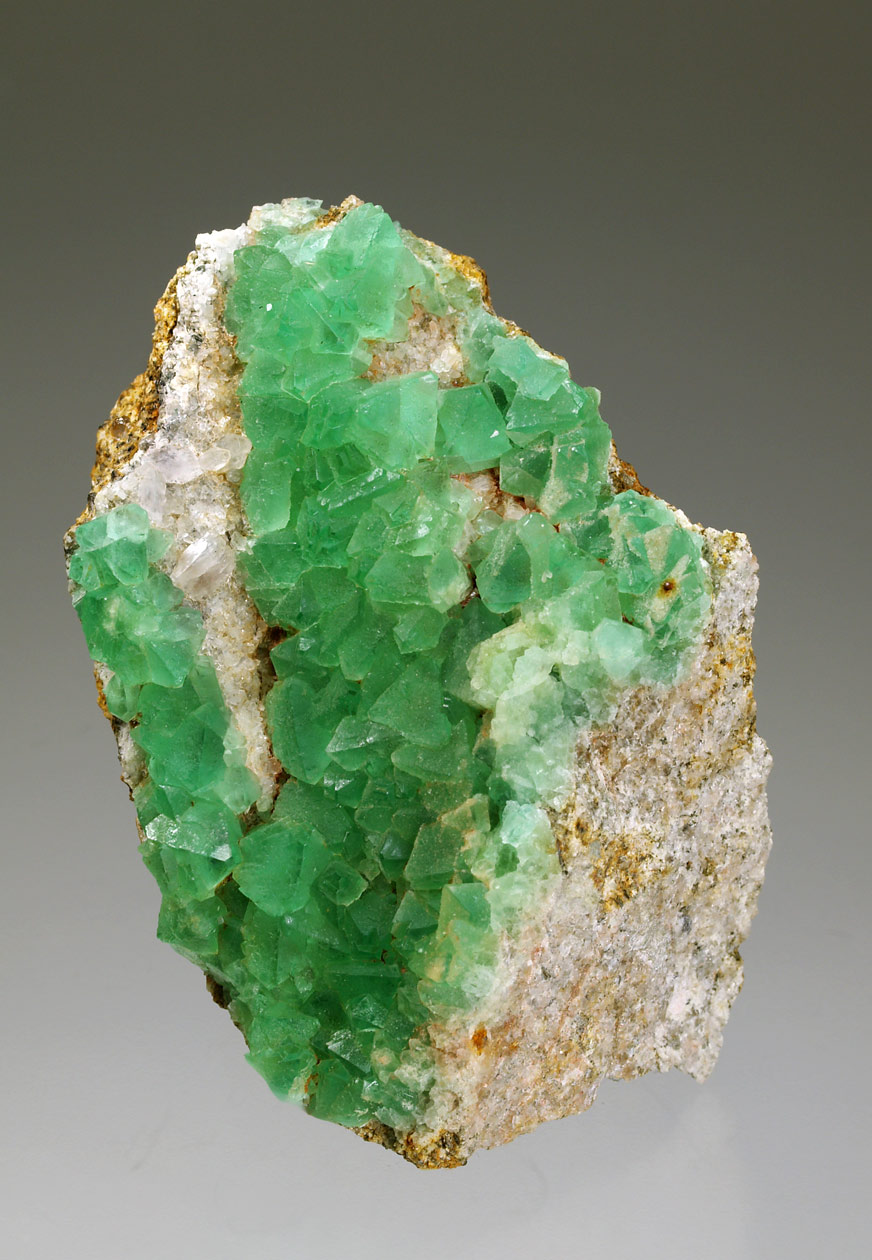

A classic between classics of our country. This is a druse of fluorite crystals those, at first glance, seem just octahedra, but if you take a look carefully you will see vertices truncated by cube. Some crystals show parallel growth and other are interpenetrated. Good transparence and exceptional green color. Acompanied by small quartz crystals.
This specimen belongs to the "old" fluorites from Berta quarry, from an area of sericitized granodiorite. In the fractures, if it was enough space, they grew lining the walls. When quarry worked lower levels fluorite appeared in fresh granite matrix, but mostly without this depth of color. A great specimen.
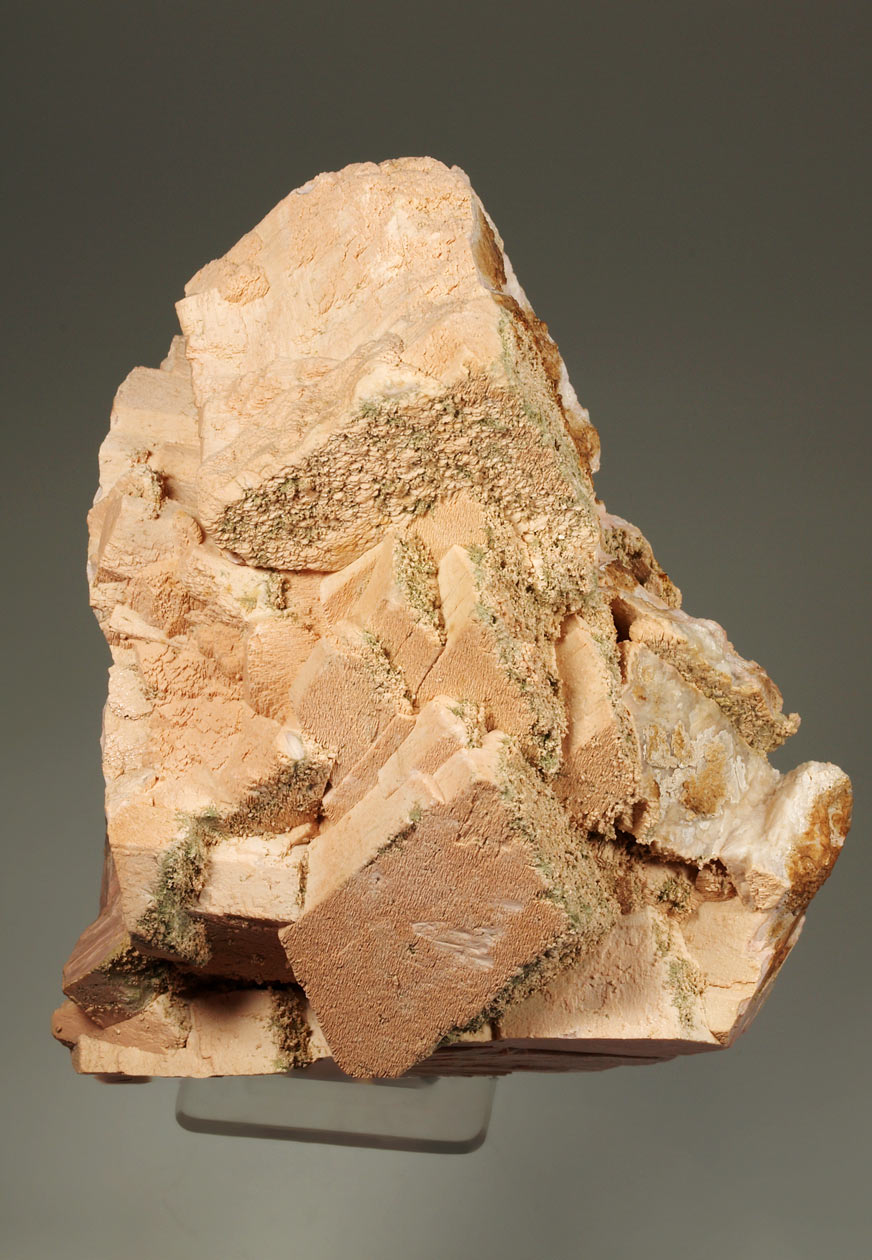


Group of huge size orthoclase crystals, showing the complex faces of the baveno twin together with complex prisms and false rhombohedrons. Nice slightly orange color and defined edges and faces. It is accompanied by small crystals of light green clinozoisite, some quartz and limonitized pyrite. It was collected many years ago near of the Montseny massif; this area was well known for orthoclase mineral collectors. A classic from a classic collection. Mr. Daunis and Mrs. Ruscalleda (wife) collection were specialized in Spanish quartz and orthoclase specimens.
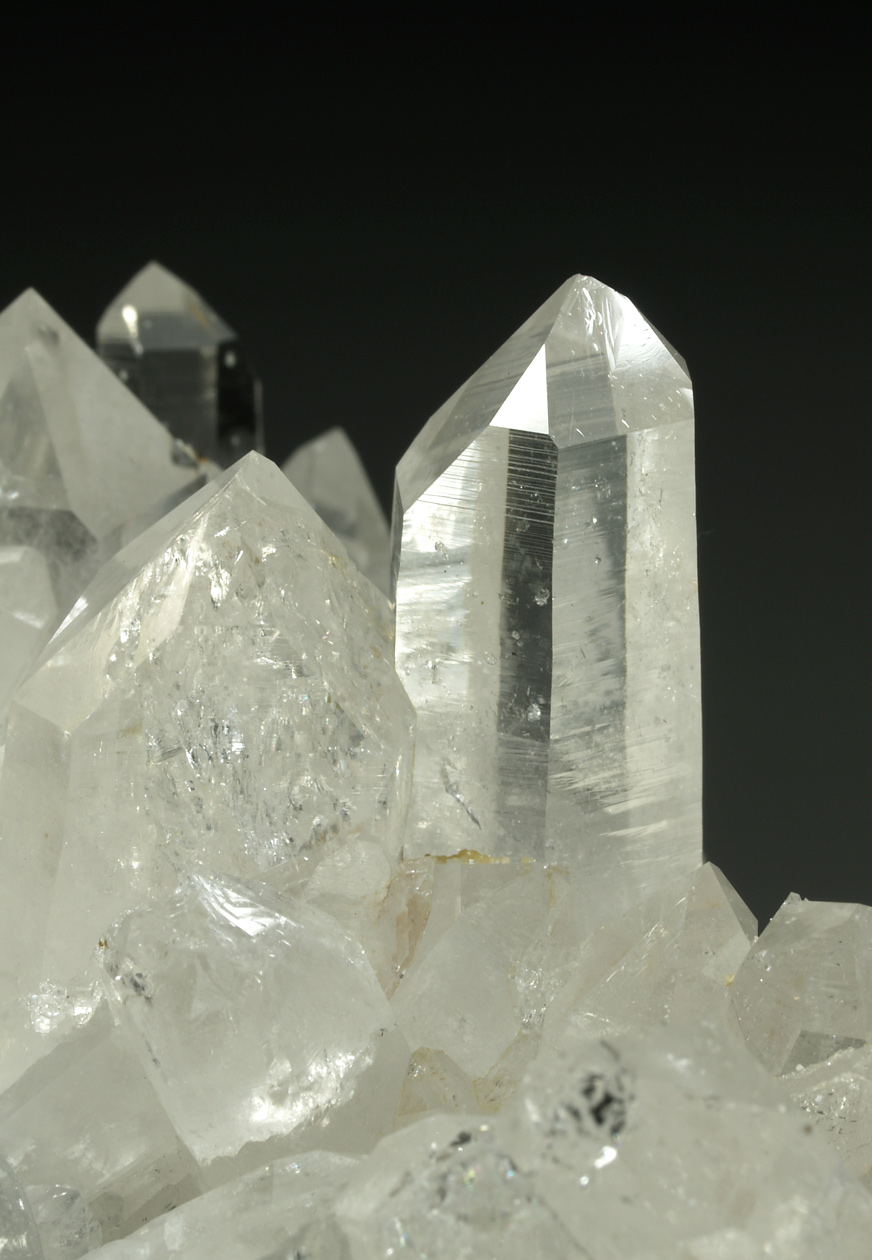


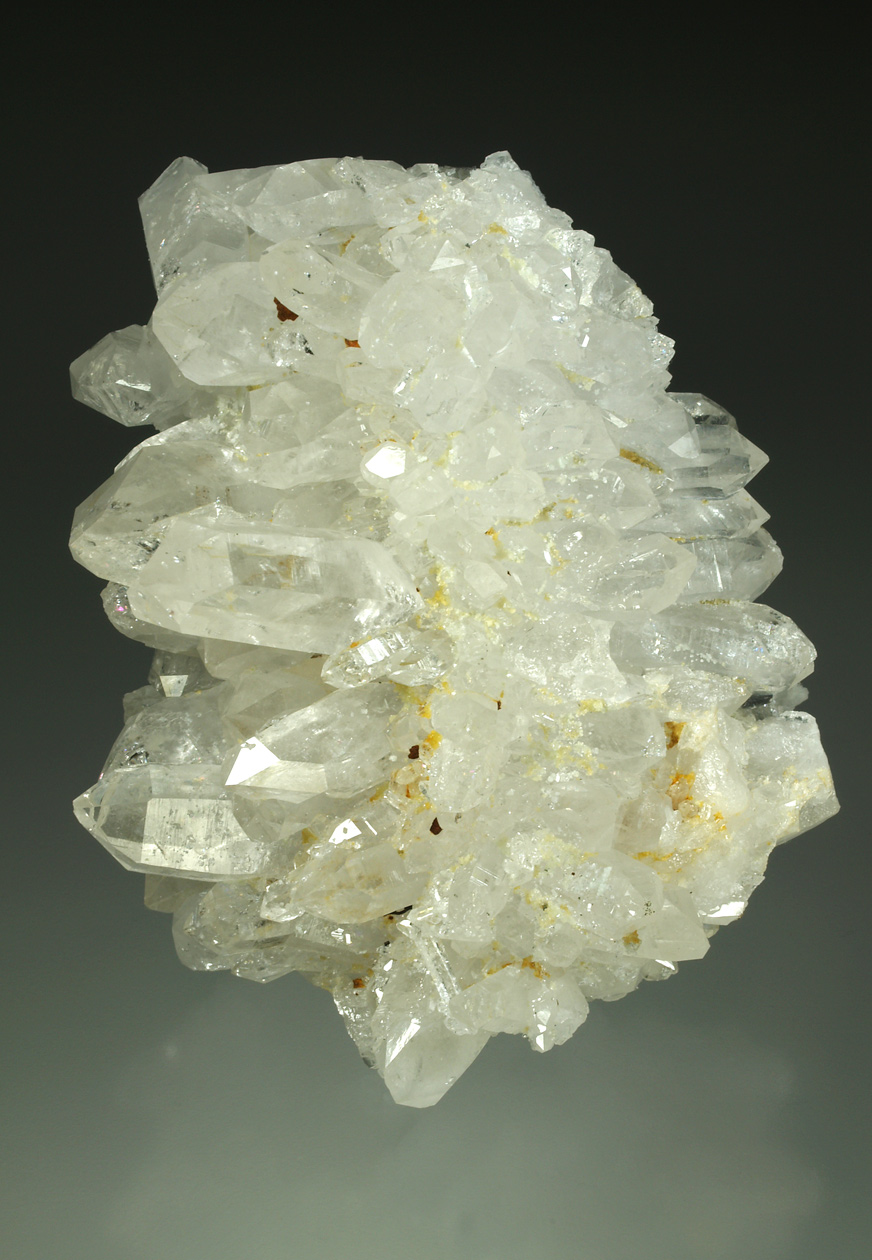
A brilliant quartz crystals from a well known Catalan area, in the Pyrenees, very appreciated for the quality of its hyaline crystals. A rich group of quartz crystals showing a elongated prism and developed and deformed rhombohedral terminal faces. Transparence and brilliance are excellent, with very well defined faces and edges. They are partially covered by small aggregates of pyrophyllite, between colorless to slightly yellow, with some goethitized pyrite. These specimens usually occur in geodes and it is very common find them falled down inside the vug; this specimen shows that one of the crystals has been lost, without affecting the beauty of the whole. This huge size sample is a nice representative of the known Llavorsí's quartz crystals.
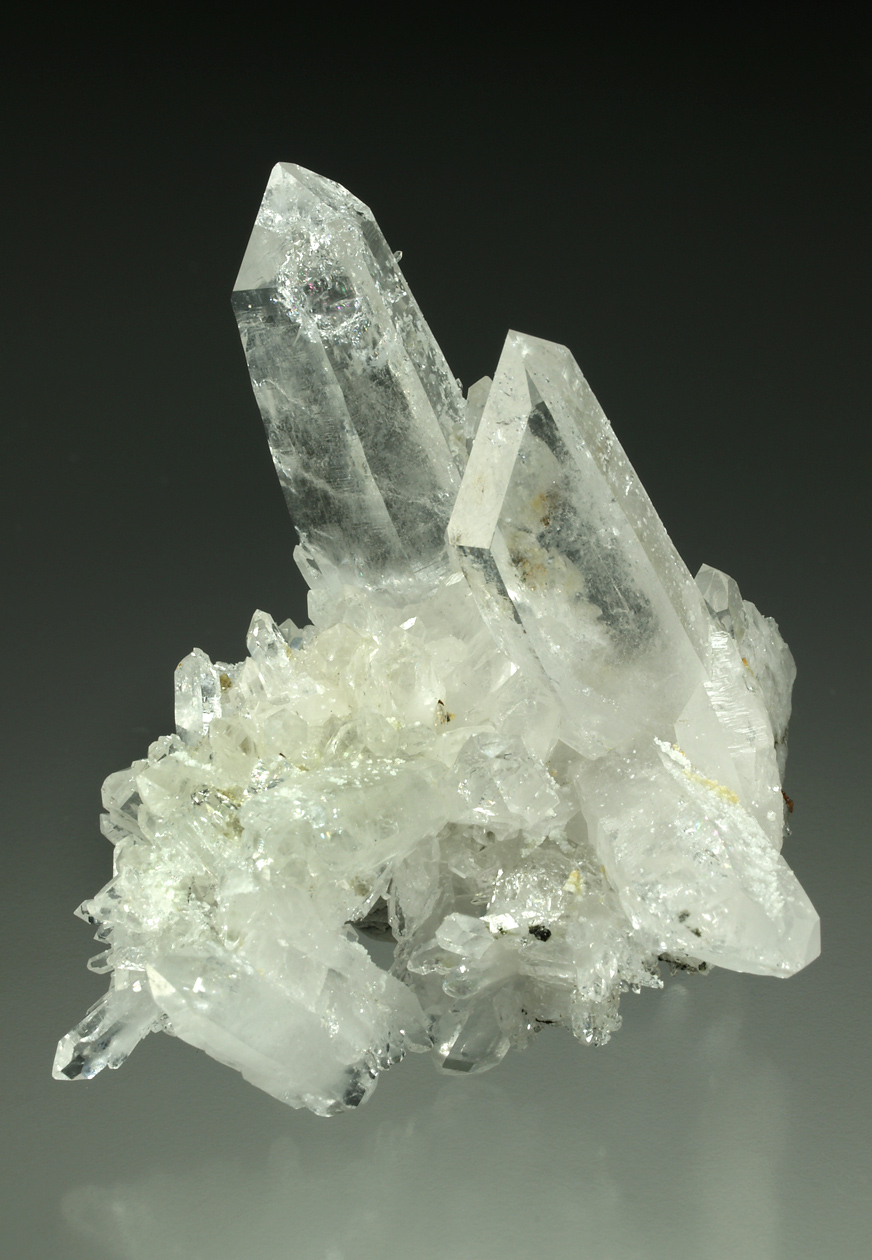


A brilliant quartz crystals from a well known Catalan area, in the Pyrenees, very appreciated for the quality of its hyaline crystals. A rich group of quartz crystals showing a elongated prism and developed and deformed rhombohedral terminal faces. We also observe some of them doubly terminated, highlighting one of them because of their size. Transparence and brilliance are excellent, with very well defined faces and edges. They are partially covered by small aggregates of pyrophyllite, between colorless to slightly yellow, with some goethitized pyrite. No damage. This sample is a nice representative of the known Llavorsí's quartz crystals.
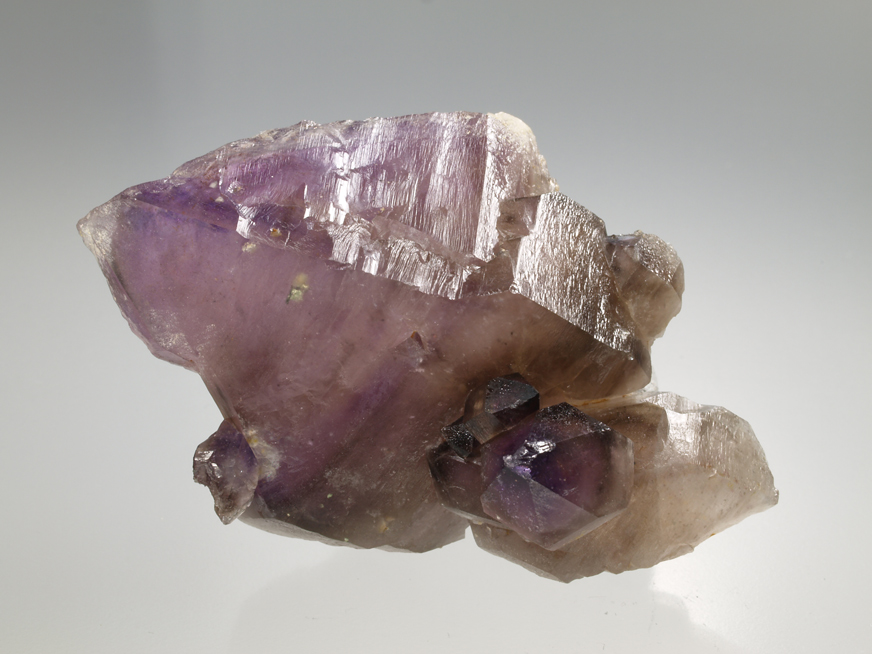

This sample is one of the first amethyst quartz specimens were found in the Les Mallorquines area, near of the well known quartz crystals area of Sils and Massabé quarry. They come from outcrops and not of any mining works. The crystal is a floater and is partially recrystallized. It shows well developed rhombohedral terminal faces and, as usual, some bright faces and other dull. Good transparence. A historical specimen from this area found in the middle 80's.
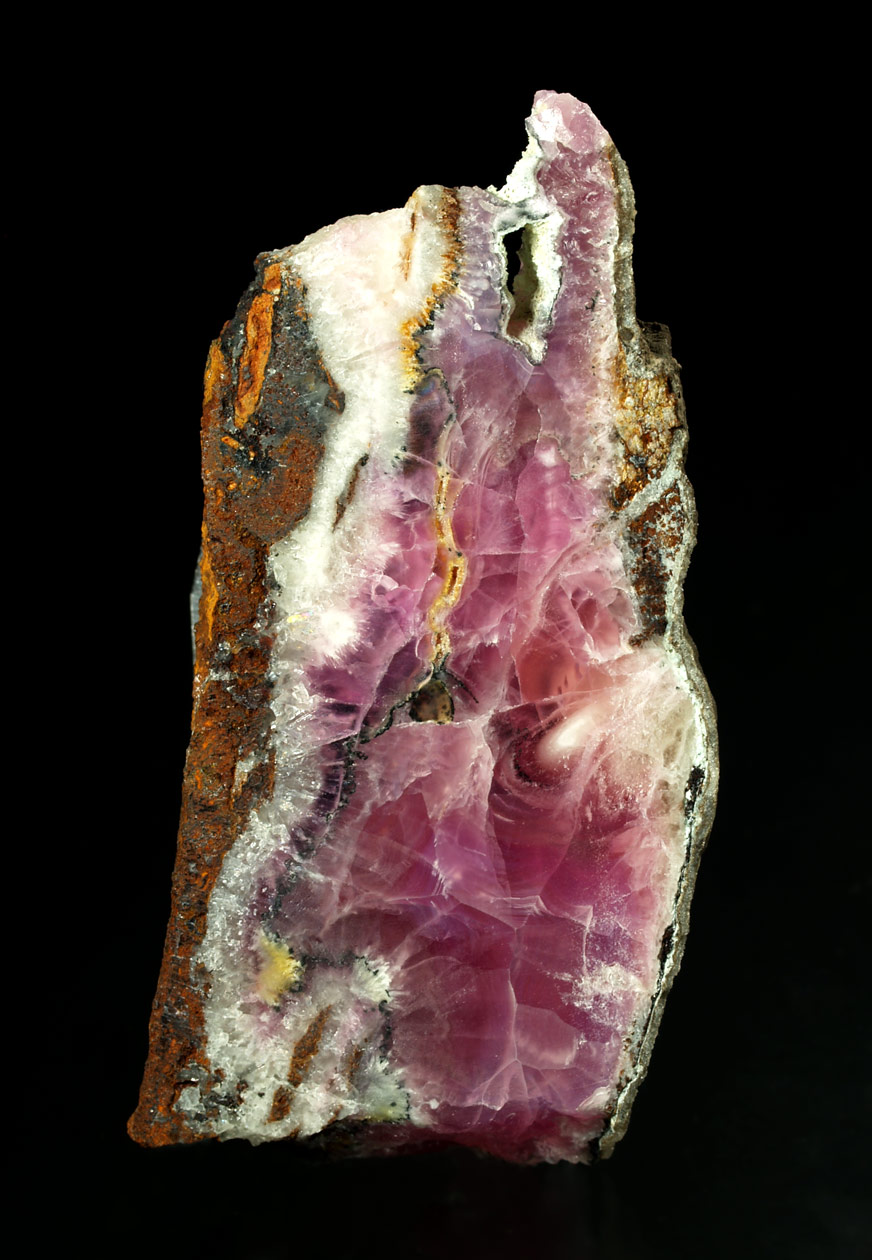
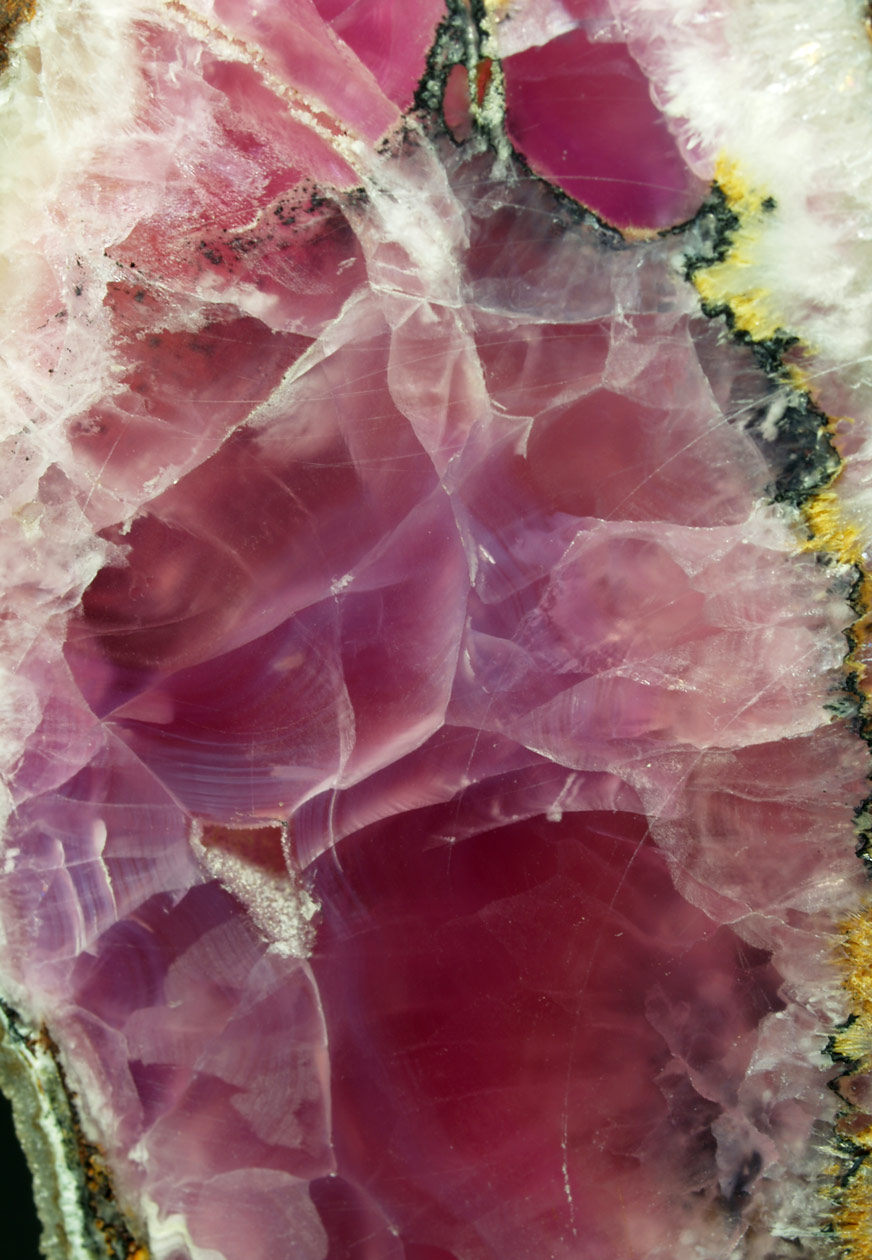

Cobaltoan calcite specimen showing carbonate growths with colours between magenta and yellow, typical for this classic Catalan mine. The mineralization is filling fissures of the Triassic conglomerates. Nowadays mine is partially collapsed and restored and it is impossible to get specimens. This sample is from a previous single finding before shaft was filled and some galleries restored.
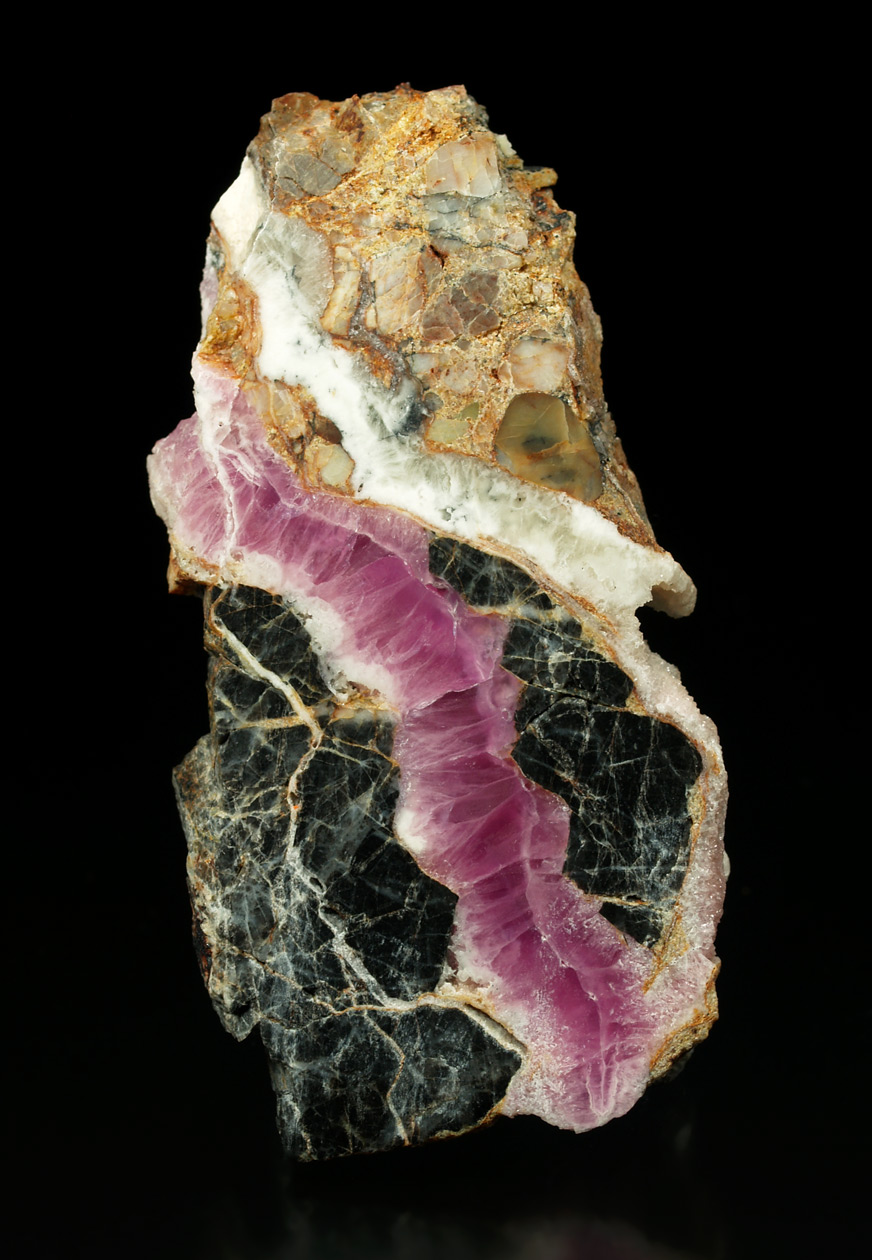


A nice cobaltoan calcite specimen showing concretionary growths with a good and deep colour. The mineralization is filling fissures of the Triassic conglomerates, which are very visible in this specimen. Main side shows a polished section where we can enjoy perfectly banded purple calcite and conglomerate individual clasts. Nowadays mine is partially collapsed and restored and it is impossible to get specimens.
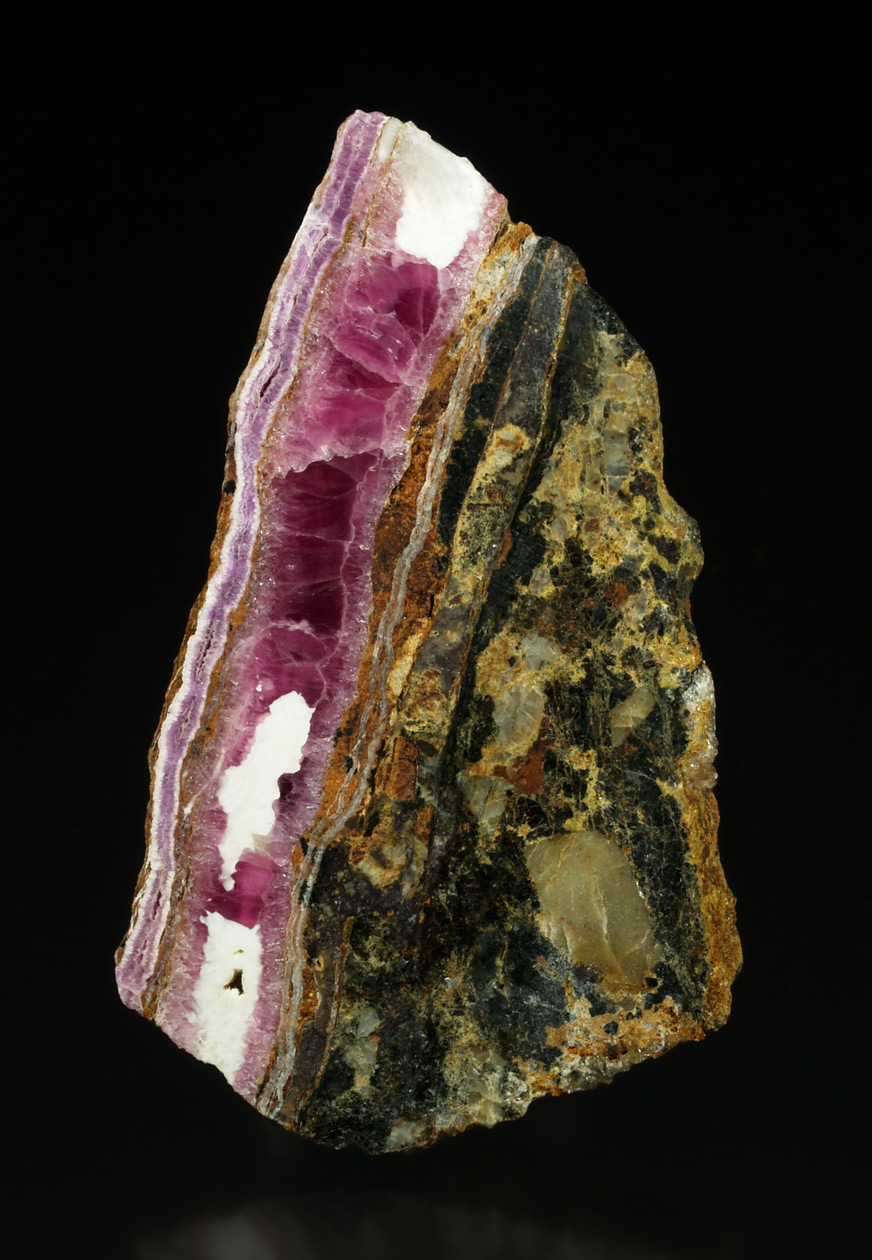
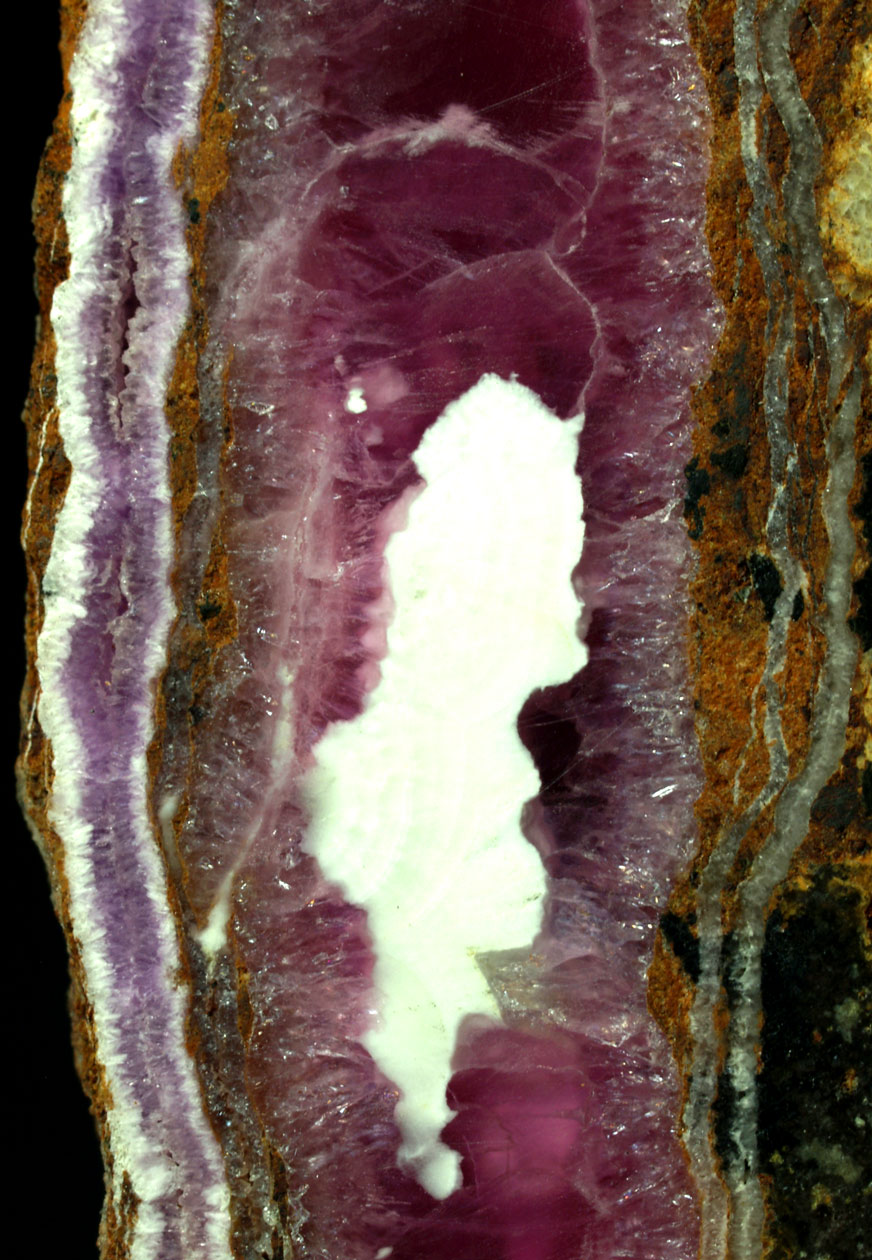
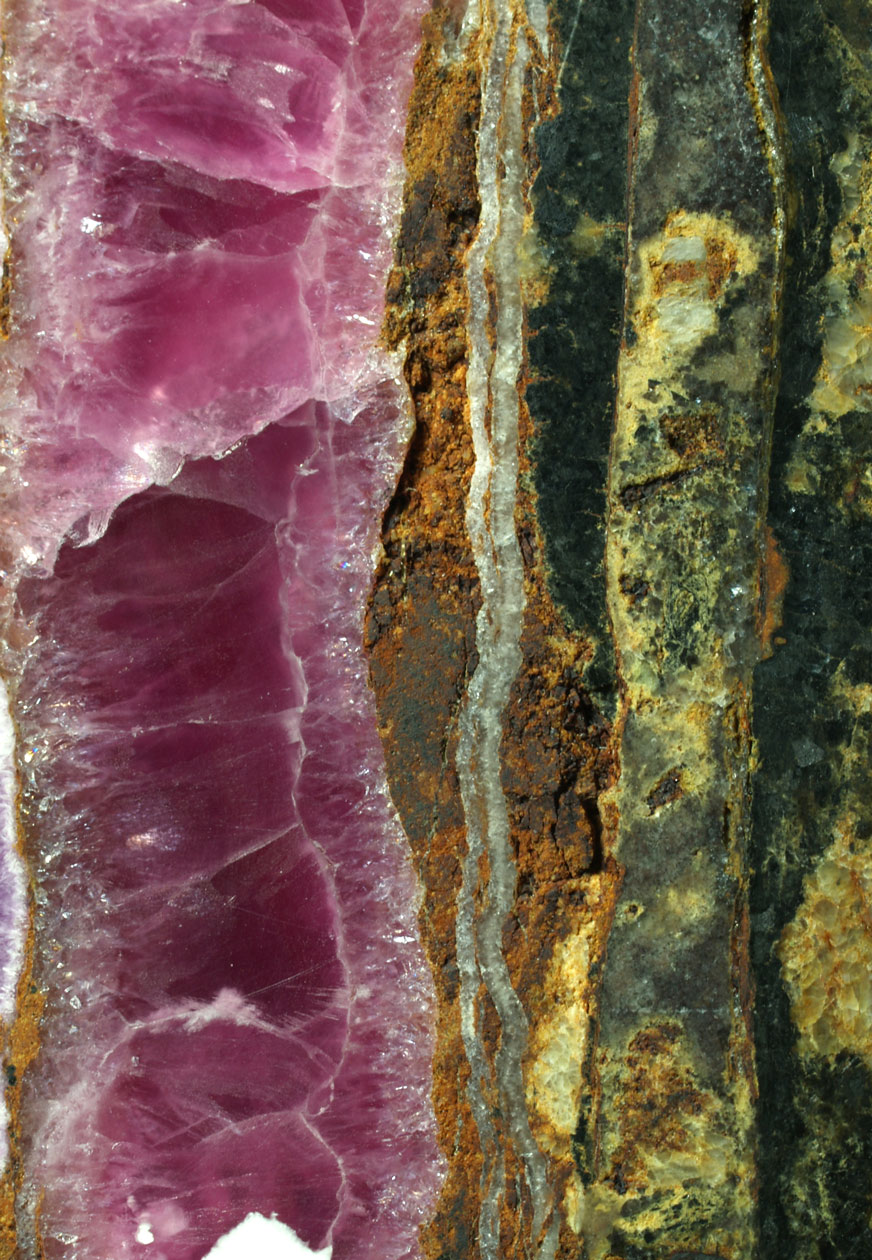

A nice cobaltoan calcite specimen showing polished concretionary growths with a good and deep color and including white aragonite. The mineralization is filling fissures of the Triassic conglomerates, which are visible in this specimen.
Main side shows a polished section where we can enjoy perfectly banded purple calcite and conglomerate individual clasts. Nowadays mine is partially collapsed and restored and it is impossible to get specimens.
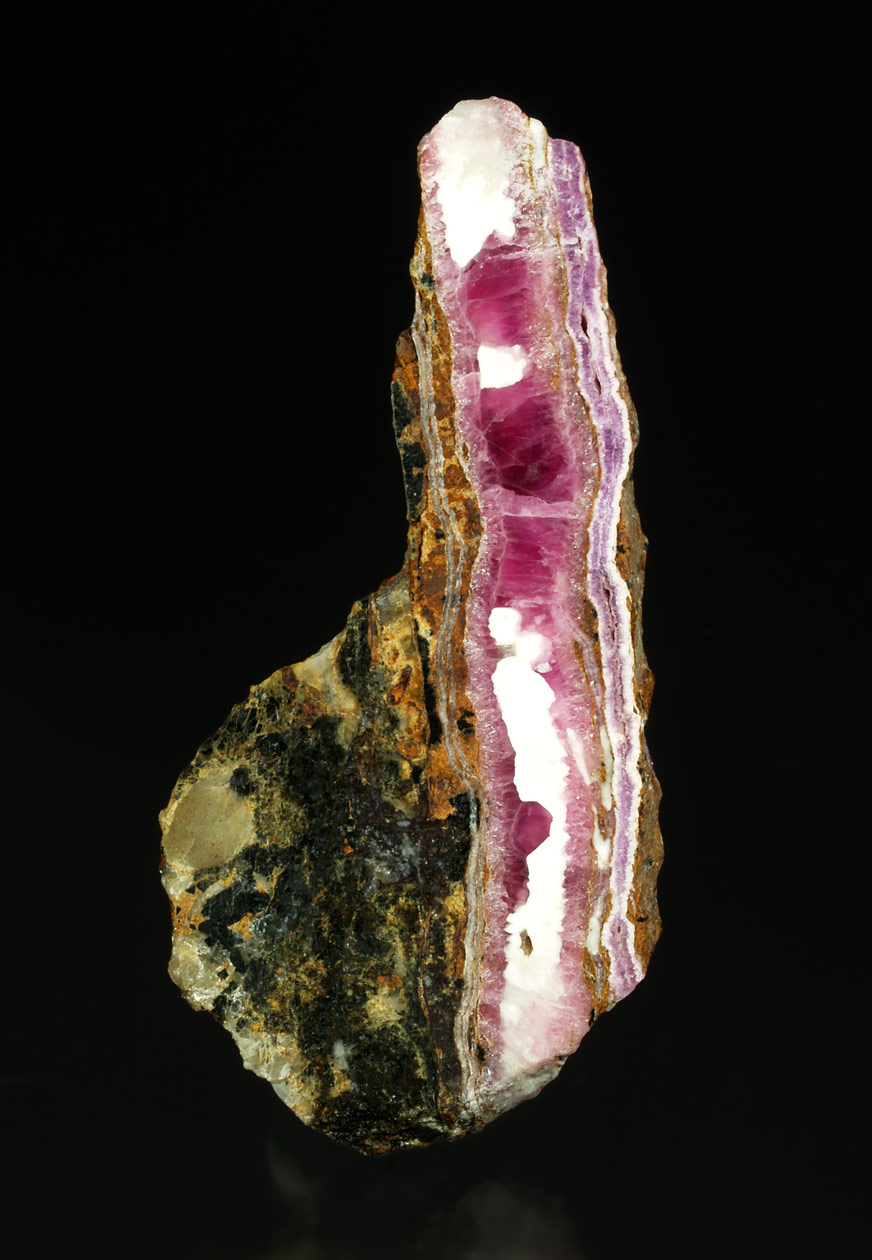

A nice cobaltoan calcite specimen showing polished concretionary growths with a good and deep color and including white aragonite. The mineralization is filling fissures of the Triassic conglomerates, which are visible in this specimen. Main side shows a polished section where we can enjoy perfectly banded purple calcite and conglomerate individual clasts. Nowadays mine is partially collapsed and restored and it is impossible to get specimens.
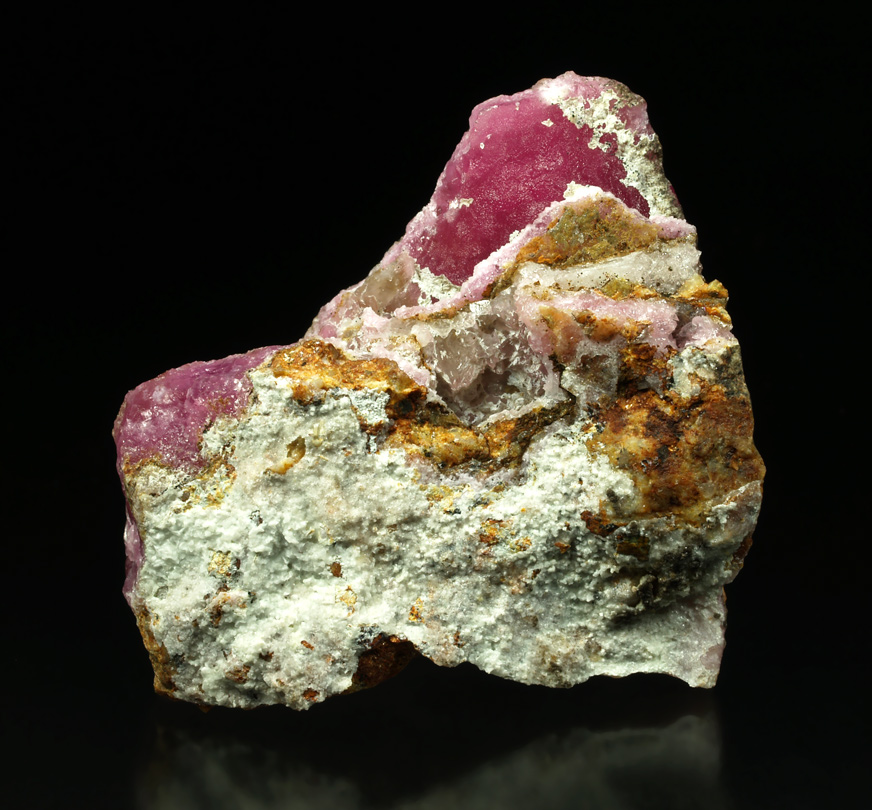


Cobaltoan calcite specimen showing brilliant carbonate growths with colours between magenta and yellow, typical for this classic Catalan mine. The mineralization is filling fissures of the Triassic conglomerates. Nowadays mine is partially collapsed and restored and it is impossible to get specimens. This sample is from a previous single finding before shaft was filled and some galleries restored.
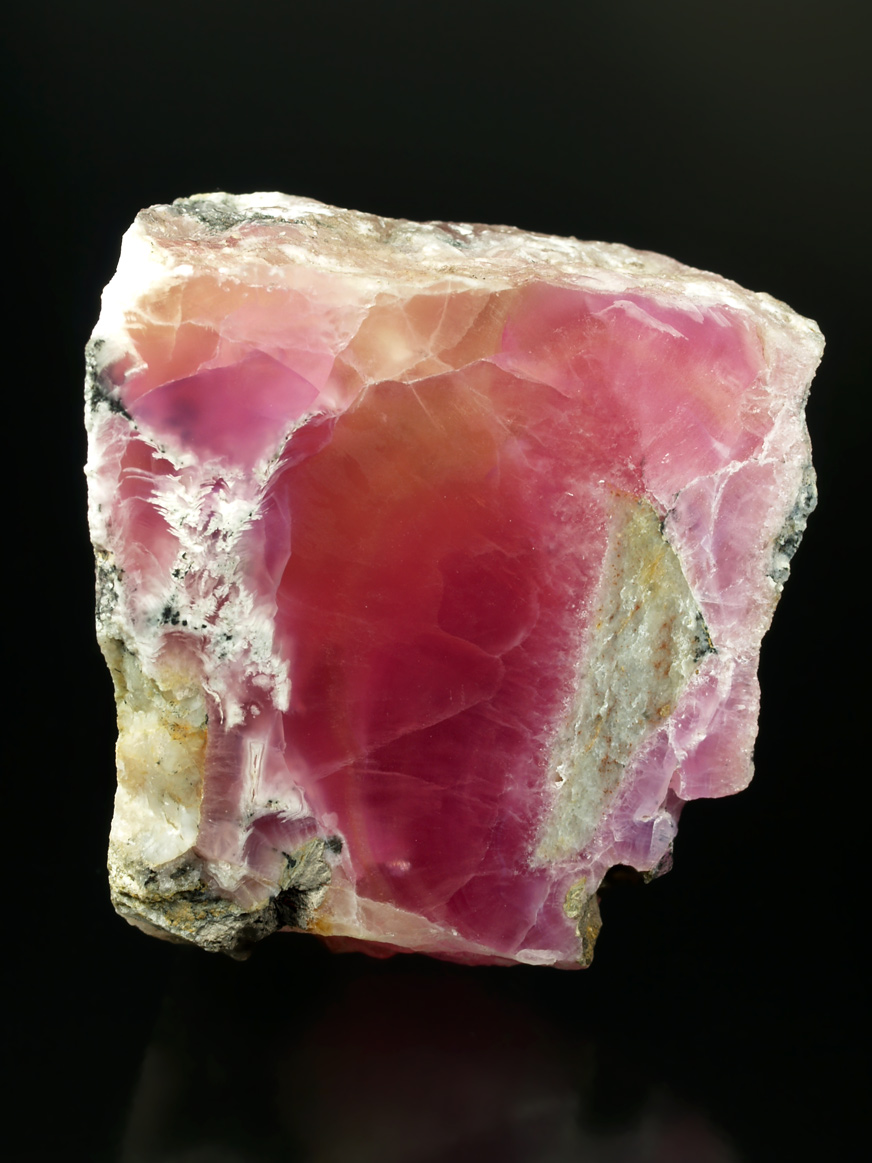


Cobaltoan calcite specimen showing carbonate growths with colours between magenta and yellow, typical for this classic Catalan mine. The mineralization is filling fissures of the Triassic conglomerates. Nowadays mine is partially collapsed and restored and it is impossible to get specimens. This sample is from a previous single finding before shaft was filled and some galleries restored.
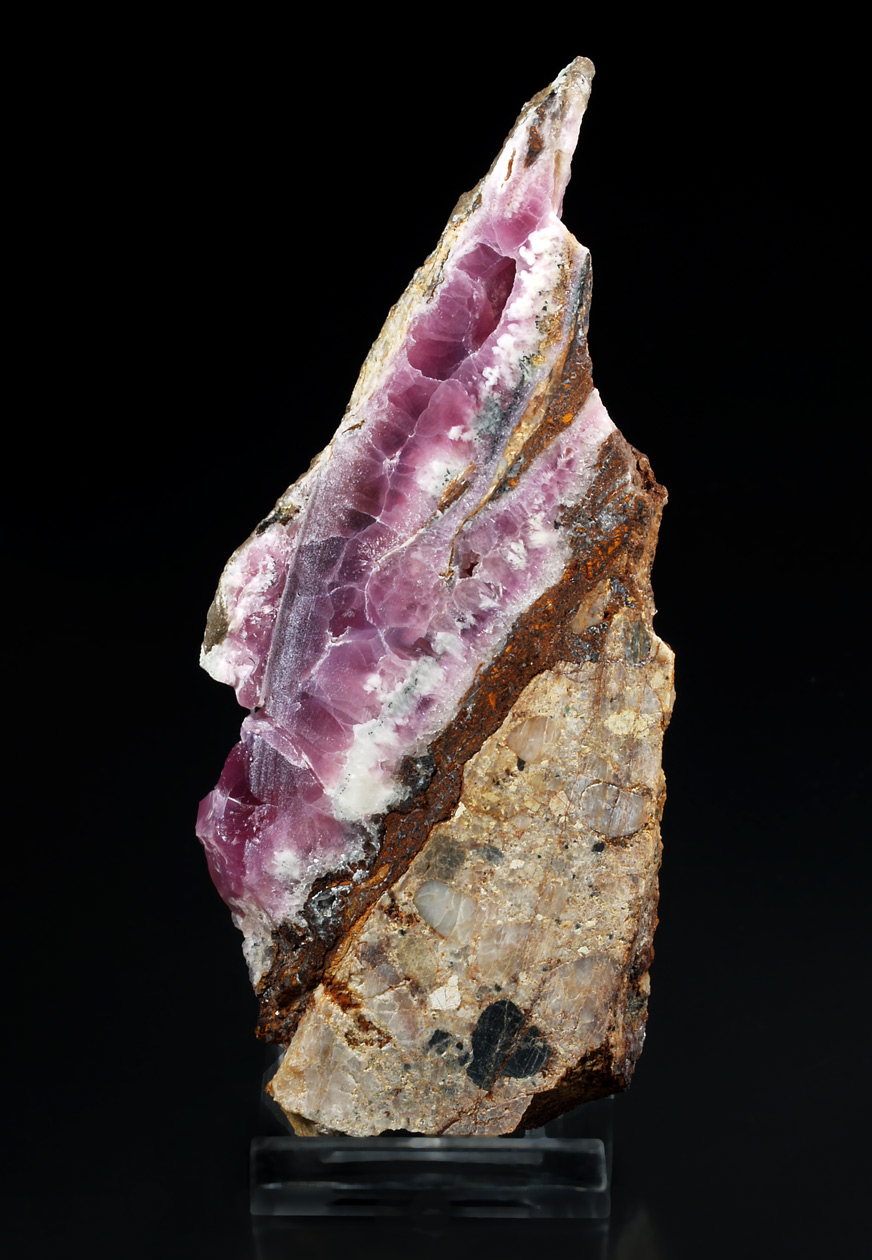


A huge size cobaltoan calcite specimen showing concretionary growths with a good and deep color and covering white aragonite aggregates. The mineralization is filling fissures of the Triassic conglomerates, which are very visible in this specimen.
Main side shows a polished section where we can enjoy perfectly banded purple calcite and conglomerate individual clasts. Nowadays mine is partially collapsed and restored and it is impossible to get specimens.
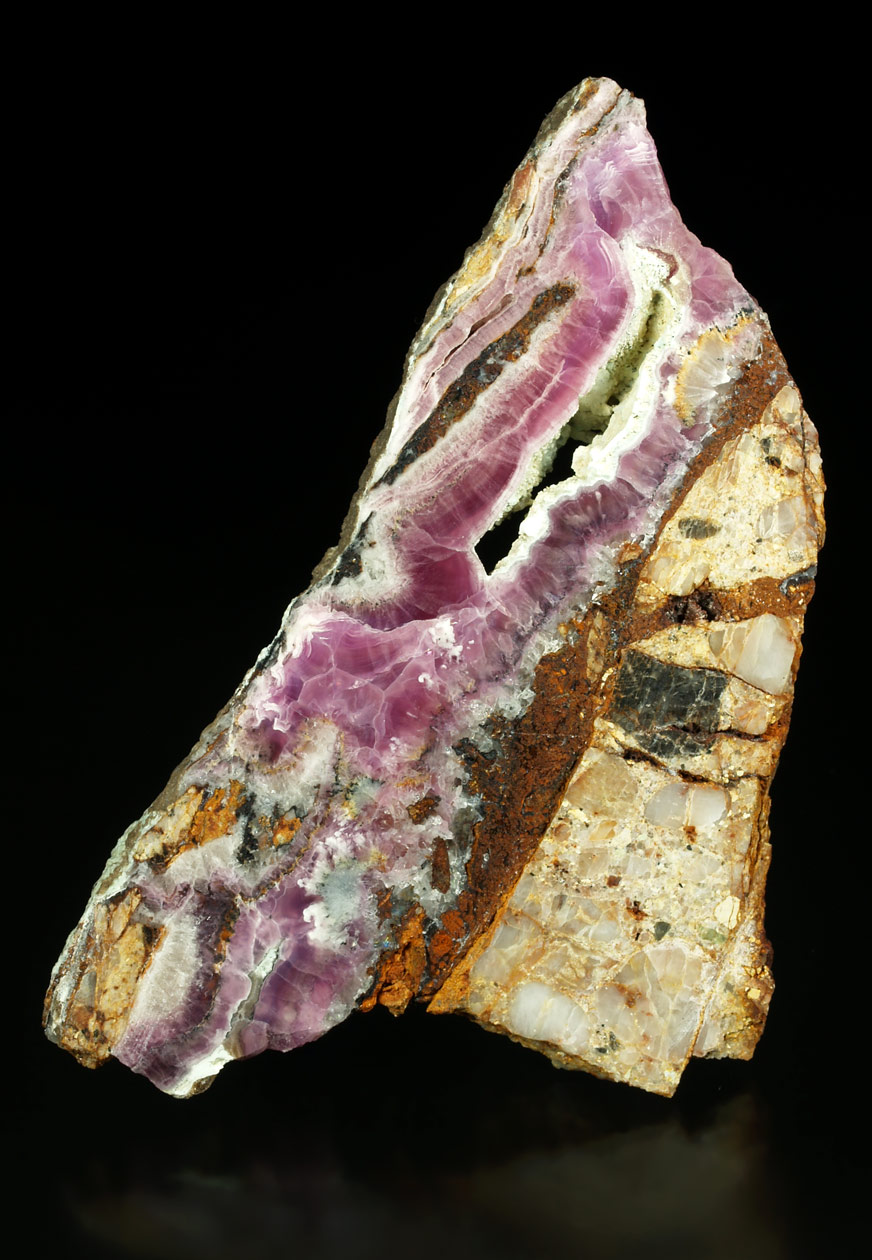


A huge size cobaltoan calcite specimen showing concretionary growths with a good and deep purple color. The mineralization is filling fissures of the Triassic conglomerates, which are very visible in this specimen and with a cavity that gives an aesthetic shape.
One side shows a polished section where we can enjoy perfectly banded purple calcite and conglomerate individual clasts. On the other side fracture is totally natural and not polished. Nowadays mine is partially collapsed and restored and it is impossible to get specimens.